Cluster headaches are among the most severe pain conditions known and represent an enormous physical and psychological burden for those affected. Many people with cluster headache spend years or even decades searching for reliable information, effective therapies, and practical strategies for coping with the condition in everyday life.
This information hub is intended for people with episodic and chronic cluster headache, as well as for relatives and interested readers. It brings together essential information on typical symptoms, known triggers, common pharmacological and non-pharmacological treatment approaches, and supportive measures for daily life. The content has been compiled by long-term sufferers and is based on personal experiences, observations, and publicly available knowledge.
The goal of this Cluster Headache Information Hub is to provide orientation, present connections in a clear and understandable way, and help those affected engage in informed discussions with their treating physicians. It does not replace medical advice, but it can support individuals in better understanding their own cluster headache and making more informed personal decisions.

What Is Cluster Headache?
Cluster headache is a rare but extremely painful headache disorder. It is characterized by recurrent, one-sided attacks of pain that typically occur around the eye, temple, and forehead. Those affected often describe the pain as stabbing, drilling, or burning, and it reaches very high intensity within just a few minutes.
A cluster headache attack usually lasts between 15 minutes and 3 hours and may occur several times a day—often at night. Attacks are frequently accompanied by autonomic symptoms on the painful side, such as a reddened or tearing eye, a blocked or runny nose, drooping of the eyelid, or pronounced inner restlessness.
Episodic Cluster Headache
In episodic cluster headache, attacks occur in time-limited phases (“episodes”). These episodes can last for several weeks to months and are interrupted by symptom-free intervals that often last months or even years. Outside of an episode, many affected individuals are nearly or completely pain-free.
Chronic Cluster Headache
In chronic cluster headache, longer symptom-free intervals are absent. Either the attacks occur almost continuously, or pain-free periods last less than three months per year. This form is particularly burdensome, as it can severely affect daily life, professional activity, and psychological stability. Many people with chronic cluster headache have undergone numerous treatment attempts over time and are not uncommonly considered difficult to treat or “therapy-resistant” in medical practice.
Similarities Between Both Forms
Regardless of whether cluster headache is episodic or chronic, the quality of pain, the typical accompanying symptoms, and the possible triggers are very similar. Individual management of triggers, medications, and supportive measures also plays a central role in both forms.
Specialized Points of Contact for Cluster Headache in Germany
Cluster headaches are a rare and complex condition. Over the years, many affected individuals experience that despite numerous medical consultations, they do not receive adequate or long-term effective care. One key reason for this is that cluster headaches require specific experience and specialization.
For this reason, it is advisable to consult neurologists and clinics that have a proven focus on cluster headache or other trigeminal autonomic headache disorders. Specialized headache centers generally have greater experience in diagnosis, acute treatment, preventive therapy, and complex disease courses—particularly in cases of chronic cluster headache.
An overview of physicians and clinics in Germany with a focus on cluster headache can be found in the following physician list:
Physician List: Specialized Points of Contact for Cluster Headache in Germany
This list can provide valuable orientation, but it does not replace an individual assessment of whether a particular practice or clinic is suitable for one’s personal situation. Waiting times, regional differences, and personal experiences can vary significantly.
Overview: Commonly Used Treatment Approaches for Cluster Headache
Various treatment approaches are used for cluster headaches. Which measures are chosen depends, among other things, on whether the course is episodic or chronic, how frequent and severe the attacks are, and which therapies have already been tried. The following overview is provided for informational purposes only and does not constitute a recommendation or evaluation of individual treatments.
Acute Treatment of Cluster Attacks
The following are commonly used to treat individual attacks:
- Triptans: Depending on the specific medication, administered as an injection (auto-injector), nasal spray, or tablet. Effectiveness and onset of action vary significantly depending on the route of administration.
- Medical oxygen (O₂): Inhalation via a mask with a reservoir bag, usually at a high flow rate. Oxygen is described by many affected individuals as a well-tolerated acute treatment option.
- Local anesthetics in the nasal/pharyngeal area: In certain cases, locally anesthetic substances are applied to the upper nasal and pharyngeal region.
These measures aim to interrupt or alleviate an ongoing attack as quickly as possible.
Medications Used for Prophylaxis
To prevent or reduce the frequency and severity of attacks, the following are used, among others:
- Calcium channel blockers (e.g., medications commonly used in cardiology)
- Corticosteroid therapies (time-limited, oral or intravenous)
- Lithium, particularly in cases of chronic cluster headache
- CGRP antibodies (monoclonal antibodies): Originally developed for migraine prevention and, in some cases, also used or studied for cluster headaches. Their use is generally off-label or within clinical trials.
These medications are sometimes used in combination and require close medical supervision.


Interventional and Device-Based Procedures
In more severe or therapy-resistant cases, additional procedures are sometimes used:
- GON block (greater occipital nerve block): Injection of a mixture of active substances into the back of the head, in some cases under imaging guidance.
- Botulinum toxin injections (Botox): Applied to specific areas of the head and neck.
- SPG stimulation / neurostimulator: A surgical procedure intended to influence the sphenopalatine ganglion (limited availability).
Complementary Measures & Home Remedies for Cluster Headache
In addition to medical therapies, many people affected by cluster headache report using complementary measures and “home remedies” during an attack or as supportive strategies in everyday life. These approaches do not replace medical treatment but are often described by patients as helpful adjuncts.
Commonly mentioned home remedies and supportive measures include:
- Cold applications: Cooling packs, cooling masks, cold compresses, or exposure to cold air around the face and neck are perceived as relieving by many affected individuals.
- Caffeine (coffee, cola, energy drinks): Caffeinated beverages such as coffee, cola, or energy drinks are used by some people, particularly at the onset of an attack.
- Movement and physical activity: Walking around, light movement, or deliberate muscle tension during an attack is perceived by some as more helpful than complete rest.
- Breathing techniques: Deep, conscious inhalation and exhalation—sometimes in combination with oxygen—are frequently mentioned as a way to better cope with an attack.
- Pressure stimuli: Applying pressure to certain areas of the face or head (e.g., eyebrows, temples) is described by some as providing short-term relief.
- Eye patch: Temporarily covering the painful eye is considered helpful by many affected individuals. Further information can be found here: Cluster Headache & Binocular Vision Dysfunction and here: Eye Patch Test for Cluster Headache.
- Medical cannabis: Occasionally mentioned as a complementary measure. Effects, tolerability, and legal conditions vary greatly from person to person.
- Daily structure and nutrient supply: Many affected individuals report that regular breaks, adequate fluid intake, a stable daily routine with consistent sleep and meal times, and sufficient intake of essential nutrients may also play an important role.
Note: The effectiveness of these home remedies and complementary measures varies greatly between individuals. What one person experiences as helpful may be ineffective or even unpleasant for another. Many people affected combine several of these approaches depending on the situation.
Typical Triggers and Influencing Factors in Cluster Headache
Many people affected report specific triggers and influencing factors that may be associated with the occurrence or intensity of cluster headache attacks. Which factors are relevant varies from person to person; however, similar patterns appear repeatedly in experience reports.
Commonly mentioned triggers and stressors include, among others:
- Alcohol, especially red wine, sparkling wine, or beer
- Histamine-rich foods (e.g., aged cheeses, processed meats, certain fruits)
- Strong brightness, glare, and flickering light
- Screen work and intensive visual strain, prolonged near vision
- Heat, significant altitude changes, and weather fluctuations
- Noise, intense odors, solvents, or fragrances
- Stress, emotional strain, and lack of sleep
- Irregular daily rhythms or skipped meals
- Infections such as colds or sinus infections
- Physical exhaustion, prolonged focused work, or intense physical exertion
Note: These triggers do not affect all individuals in the same way. Consciously observing personal triggers can help better understand individual patterns and relationships.
Binocular Vision Dysfunction as a Trigger for Cluster Headache
In recent years, it has become apparent that Binocular Vision Dysfunction (BVD) may play a significant role in many people with cluster headaches. This misalignment of the eyes affects only binocular vision and leads to constant overload of the eye movement muscles. As a result, irritation or inflammation of the trochlea (the pulley-like structure above the painful eye) may occur.
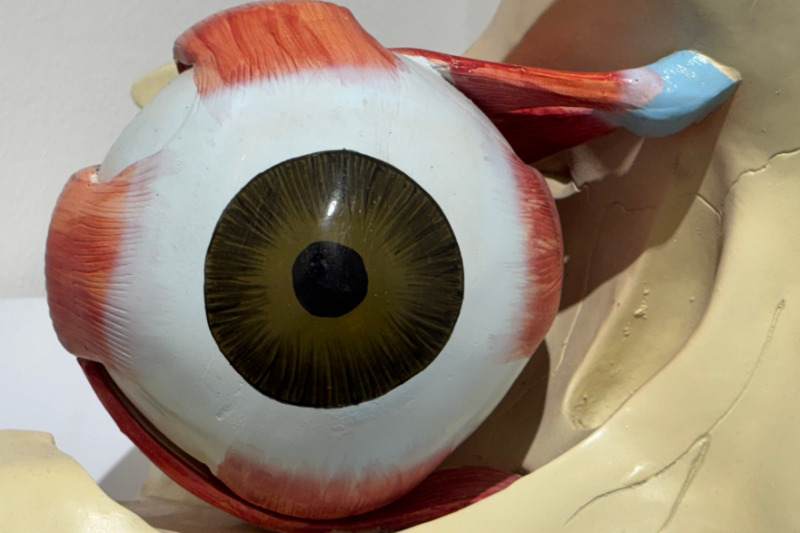
A simple functional indicator of this mechanism is the eye patch test: when the painful eye is temporarily covered, binocular vision is eliminated. This relieves the eye muscles. In many affected individuals, this situation leads to noticeable changes in the frequency or intensity of cluster headache attacks. Detailed information can be found here: Eye Patch Test for Cluster Headache.
Prism glasses address this exact mechanism: they relieve the eye movement system during binocular vision without completely eliminating the eyes’ natural compensatory abilities. For many affected individuals, this results in a significant reduction of symptoms — in most cases even leading to complete freedom from pain. Further information can be found here:
- Cluster Headache: The Role of Binocular Vision Dysfunction and the Effect of Prism Glasses
- Guide to Prism Glasses for Cluster Headache
- Experience Reports on Prism Glasses for Cluster Headache
To date, no scientific study on this connection is available. However, such research would be highly desirable in order to systematically examine the observations made so far and to place this approach in an objective, scientific context.
This tattoo was created for Dirk Möhring, who has been a long-term chronic cluster headache sufferer and has been pain-free since 2021 thanks to prism glasses. It depicts cluster headache in a very powerful and striking way.
Note: The “devil’s” hand grips exactly the area where the pain trigger is very likely located – the trochlea above the eye.
Here you can read Dirk Möhring’s personal experience report.

Severe Disability Status in Cluster Headache
For many affected individuals, cluster headaches represent a significant and long-term impairment. In principle, it is therefore possible in Germany to apply for official recognition of a severe disability (degree of disability – GdB) with the responsible pension or benefits authority (Versorgungsamt).
In practice, however, cluster headaches are often underestimated during the assessment process. Applications are frequently evaluated with a GdB that is too low or are initially rejected. Reasons for this include incomplete information, vague descriptions of functional limitations, or missing medical statements.
Therefore, the following points are important:
- The diagnosis of cluster headache should be clearly and unambiguously stated.
- The frequency, duration, and intensity of attacks should be described as precisely as possible (e.g., by keeping a headache diary).
- Functional limitations (such as sleep deprivation, medication side effects, psychological strain, inability to work, or negative effects on social life) should be described in detail.
- Treating physicians should be informed about the application, as they may be asked by the authority to provide medical statements.
If the application is rejected or the assigned GdB is considered too low by the affected person, it is possible to file an objection. Support may be provided by social welfare organizations (such as the VdK) or by legal professionals specializing in social law.
An officially recognized GdB — particularly from 50 onward — may entail various compensatory benefits, such as additional vacation entitlement, tax relief, or special protection against dismissal. At the same time, it should be carefully considered on an individual basis whether and in what context the severe disability status is addressed in the professional environment.
This section is intended for informational purposes only and does not replace legal advice.
Impact of Cluster Headache on Social Life and Mental Health
For many affected individuals, cluster headaches profoundly interfere with social and emotional life. The extreme, recurring pain attacks are barely predictable and force many people to adapt their entire lives around the condition. Appointments with friends, family celebrations, or professional commitments often have to be canceled at short notice. Many affected individuals increasingly withdraw because they fear the next attack or no longer feel physically and emotionally resilient.
Especially in cases of chronic cluster headache, an enormous and persistent burden develops over the years. Sleep deprivation, exhaustion, ongoing pain, and the feeling of having no control over one’s own body have a massive impact on mental health. A considerable number of affected individuals report feelings of hopelessness, depressive moods, and – particularly during severe phases – even suicidal thoughts. Cluster headache is therefore rightly described as one of the most psychologically distressing pain disorders.
In addition, there is often a lack of understanding in the social environment. Because affected individuals often appear “healthy” on the outside between attacks, the true severity of the condition and its associated limitations are frequently underestimated or questioned by others. This constant need to explain or justify oneself further intensifies social withdrawal.
Against this background, it is not uncommon for cluster headache to be accompanied by psychological comorbidities. Many affected individuals undergo psychotherapy at some point during their illness or temporarily receive psychotropic medication to cope with the immense emotional burden, anxiety, or depressive symptoms. These measures are often an expression of an attempt to psychologically cope with an extreme and long-lasting pain experience – not a sign of personal weakness.
Pain Scale for Cluster Headache (Example)
Many affected individuals find it helpful to categorize the intensity of their cluster headache attacks into levels. The following pain scale represents an example model based on experience reports. It is intended solely for personal orientation and description and does not claim universal validity. Individual pain perception can vary greatly.
0 – no pain
1 – mild pain
2 – mild pain, noticeable but well tolerable
3 – pain setting in, reduced ability to concentrate
4 – persistent pain, concentration severely impaired, withdrawal
5 – significant pain, thoughts of acute medication
6 – waking up due to pain, inner restlessness, irritability
7 – severe pain, pacing, fear of the duration of the attack
8 – very severe pain, intense physical tension, search for immediate relief regardless of side effects (e.g., oxygen, triptan, home remedies)
9 – unbearable pain, severe despair, desperate hope for the acute medication to work
10 – maximum imaginable pain, complete overwhelm, panic; in some affected individuals, suicidal thoughts may also occur at this stage
This scale is not a medical assessment system and does not replace medical diagnosis or therapeutic decisions. However, it may help to document symptoms more clearly and describe them more effectively when communicating with physicians or authorities.
Final Note
This information hub is intended for people with cluster headaches and their relatives and aims to provide a structured overview of common therapies, influencing factors, and complementary approaches. The content is based on many years of experience, observations, and exchanges with numerous affected individuals. It does not replace medical diagnosis or treatment and does not constitute medical or legal advice. Decisions regarding therapies, medications, or further measures should always be made in consultation with the treating neurologist.